
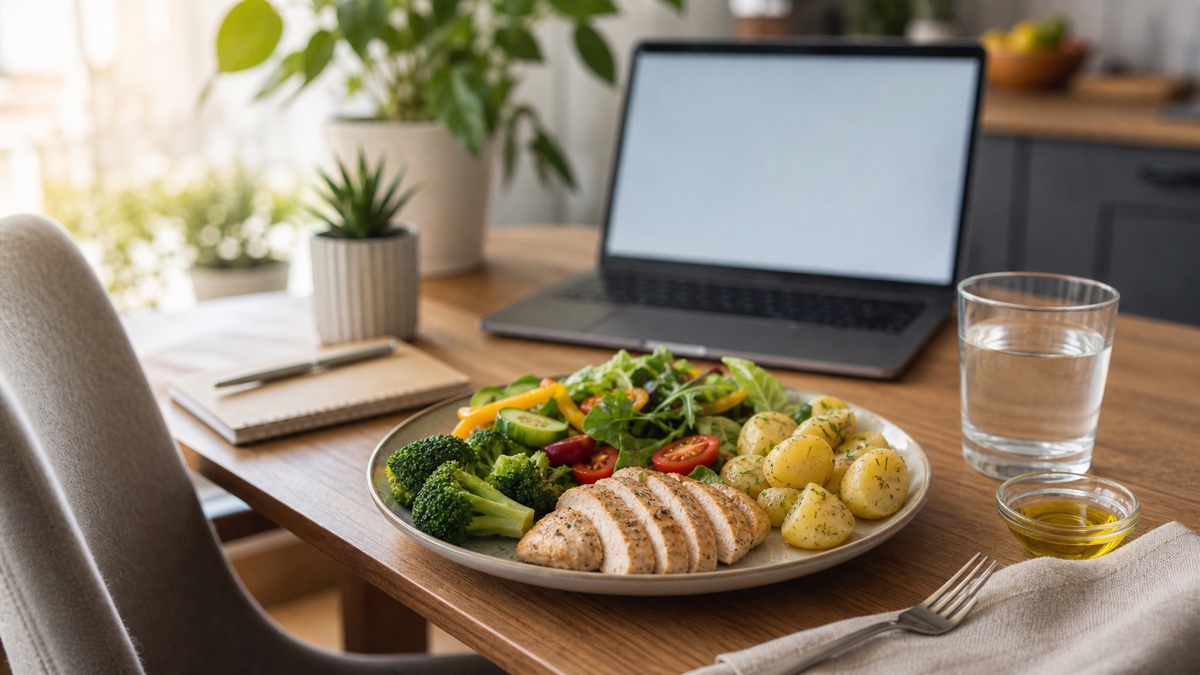
- Zacznij od większej objętości warzyw, nie od usuwania całych grup produktów.Start with more vegetable volume, not with removing whole food groups.
- Białko w posiłku pomaga utrzymać sytość przy mniejszej aktywności.Protein in the meal helps maintain fullness when activity is low.
- Węglowodany dopasuj do dnia, ale nie usuwaj ich automatycznie.Adjust carbohydrates to the day, but do not remove them automatically.
- Krótki ruch po posiłku bywa ważniejszy niż idealne makro.A short walk after meals may matter more than perfect macros.
Proporcje, nie kara
Najprostszy kierunek to pół talerza warzyw, jedna część białka i jedna część węglowodanów, z dodatkiem tłuszczu. Przy bardzo siedzącym dniu porcja kaszy lub ziemniaków może być mniejsza niż po treningu, ale nadal ma miejsce na talerzu.
Białko i objętość
Jeśli obiad to tylko makaron z sosem, głód wraca szybko. Dodaj jajka, rybę, tofu, strączki, twaróg albo mięso oraz dużą porcję warzyw. Objętość posiłku pomaga psychologicznie i fizycznie, bez potrzeby schodzenia do mini porcji.
Przekąski przy biurku
Przekąska nie jest problemem, jeśli ma funkcję. Jogurt z owocem, kanapka, orzechy z owocem albo warzywa z hummusem mogą zapobiec wieczornemu przejadaniu. Problemem jest raczej automatyczne podjadanie bez przerwy i bez sytości.
Ruch jako element talerza
Przerwa na 5-10 minut spaceru, schody, rozciąganie albo krótka droga po wodę poprawiają rytm dnia. Nie muszą „spalać obiadu”. Mają zmniejszać siedzenie i pomagać regulować apetyt oraz glikemię.
Kiedy sprawdzić zdrowie
Senność po posiłkach, nagłe zmiany masy ciała, duże pragnienie, kołatania serca albo przewlekłe zmęczenie nie są tylko kwestią talerza. Warto wtedy porozmawiać z lekarzem i wykonać zalecone badania.
Proportions, not punishment
The simplest direction is half a plate of vegetables, one part protein and one part carbohydrates, with some fat. On a very sedentary day, the portion of grains or potatoes may be smaller than after training, but it still belongs on the plate.
Protein and volume
If lunch is only pasta with sauce, hunger often returns quickly. Add eggs, fish, tofu, pulses, cottage cheese or meat plus a generous portion of vegetables. Meal volume helps both physically and psychologically without shrinking portions to almost nothing.
Desk snacks
A snack is not a problem if it has a job. Yoghurt with fruit, a sandwich, nuts with fruit or vegetables with hummus can prevent evening overeating. The bigger issue is automatic grazing without a pause and without fullness.
Movement as part of the plate
A 5-10 minute walk, stairs, stretching or a short trip for water can improve the rhythm of the day. It does not need to “burn off lunch”. It reduces sitting and may help appetite and glucose regulation.
When to check health
Sleepiness after meals, sudden weight changes, intense thirst, palpitations or chronic fatigue are not just plate-composition issues. It is worth discussing them with a doctor and doing recommended tests.
FAQ
Czy przy pracy siedzącej trzeba jeść mniej?
Czasem porcje są trochę inne, ale nie chodzi o głodzenie. Najpierw popraw proporcje i regularność.
Co zrobić z ochotą na słodycze po pracy?
Sprawdź, czy obiad miał białko, warzywa i węglowodany oraz czy między posiłkami nie była zbyt długa przerwa.
Czy spacer po posiłku ma sens?
Tak, nawet krótki. To prosty sposób na przerwanie siedzenia i wsparcie rytmu dnia.
Do desk workers need to eat less?
Sometimes portions differ slightly, but the goal is not under-eating. Improve proportions and regularity first.
What can I do about sweets after work?
Check whether lunch contained protein, vegetables and carbohydrates, and whether the gap between meals was too long.
Does a walk after eating help?
Yes, even a short one. It is a simple way to interrupt sitting and support the rhythm of the day.
Ten artykuł ma charakter edukacyjny. Nie zastępuje diagnozy, leczenia, zmiany leków ani indywidualnej konsultacji medycznej lub dietetycznej. W chorobie przewlekłej, ciąży, zaburzeniach odżywiania, przy lekach lub objawach alarmowych skonsultuj się ze specjalistą.This article is educational. It does not replace diagnosis, treatment, medication changes or an individual medical or nutrition consultation. In chronic disease, pregnancy, eating disorders, medication use or alarm symptoms, consult a qualified professional.
Chcesz dopasować ten temat do siebie?Want to adapt this topic to you?
Wyślij krótkie zapytanie i opisz, czego potrzebujesz w konsultacji. Natalia pomoże przełożyć wiedzę na plan możliwy do wykonania.Send a short enquiry and describe what you need. Natalia can help turn the information into a plan that fits real life.
Umów wizytęBook a visit